Cabernet Sauvignon: Origins, Character and Regional Expression
Cabernet sauvignon has travelled further than almost any other wine grape. From its origins in south-western France, it has become established in many of the world’s leading wine regions, producing wines that range from generous and immediately expressive to restrained, complex and exceptionally long-lived.
Its international standing is not simply a consequence of how widely it is grown. Cabernet sauvignon is valued for its ability to retain a recognisable varietal identity while expressing the climate, soils and viticultural character of the place in which it is cultivated.
Today, it is grown across a broad spectrum of climates and regions, from Bordeaux to Coonawarra, Margaret River and the Great Southern. Each expression is distinct, yet the variety remains recognisable through its dark fruit, structural tannin, natural acidity and capacity to develop with age.

Where Did Cabernet Sauvignon Originate?
Although cabernet sauvignon is regarded as one of the world’s noble grapes, it is a comparatively young variety. It emerged in south-western France as a natural crossing between cabernet franc and sauvignon blanc, most likely during the 17th century.
Its parentage helps explain some of the characteristics associated with the variety. Cabernet franc contributes dark fruit, floral and herbal qualities, while sauvignon blanc is linked to its freshness and occasional leafy or aromatic notes.
Cabernet sauvignon subsequently became a cornerstone of the great red wines of Bordeaux, particularly those of the Médoc and Graves. There, it is traditionally blended with varieties including merlot, cabernet franc, petit verdot and malbec, with cabernet contributing colour, tannin, acidity and longevity to these blends.
Today, cabernet sauvignon is the world’s most extensively planted wine grape and one of Australia’s most significant red varieties. The grape is hardy and adaptable, and grown across a broad spectrum of Australian climates, from warmer inland regions to cooler and more temperate areas.
What Does Cabernet Sauvignon Taste Like?
Typical cabernet sauvignon fruit characters include blackcurrant, cassis, blackberry and dark plum. These may be accompanied by notes of violet, dried herbs, bay leaf, graphite, cedar, tobacco or earth. The precise expression will depend on the vineyard, vintage and winemaking approach, rather than on the variety alone.
Cabernet grown in cooler conditions may show greater herbal presence, firmer tannin and more pronounced acidity. In warmer regions, the fruit may appear riper, with greater weight and generosity. The most successful sites provide enough warmth to achieve full flavour and tannin maturity while retaining freshness and aromatic detail.
Whatever its origin, structure is usually a defining characteristic. Cabernet sauvignon is generally marked by firm tannins and naturally fresh acidity. In a well-made wine, these elements form a framework around the fruit, creating persistence and length.

Why Does Cabernet Sauvignon Age Well?
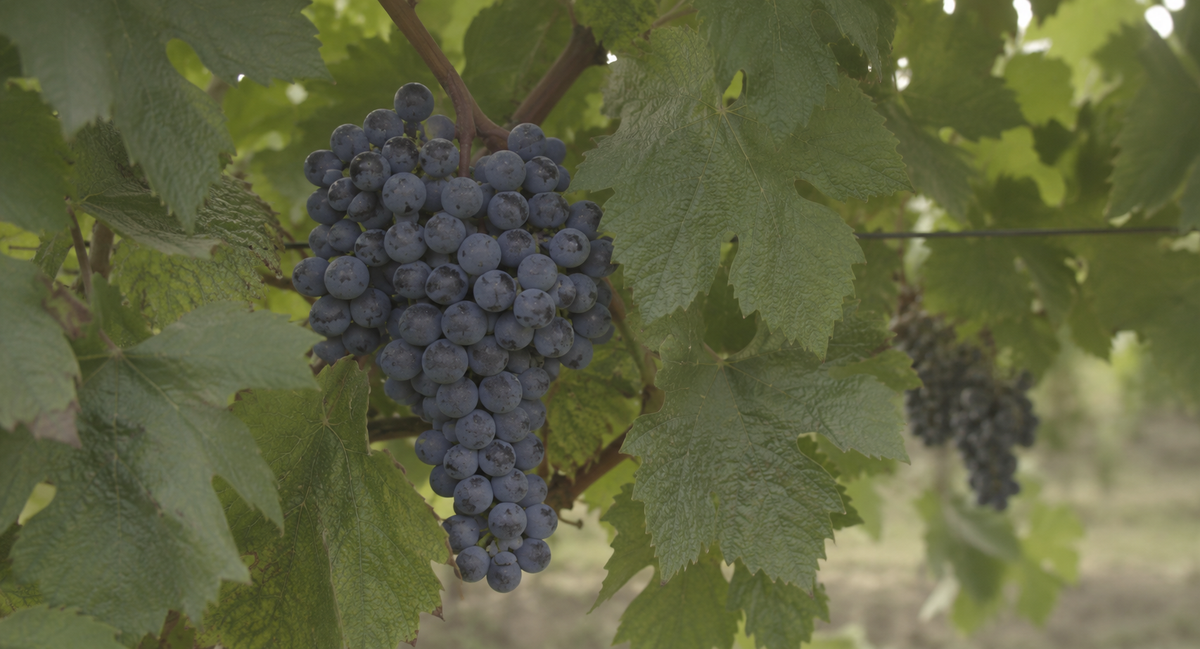
Cabernet sauvignon’s relatively small berries and thick skins provide a high proportion of skin to juice, contributing concentrated colour, flavour and tannin. Together with the variety’s natural acidity, this gives cabernet the structural elements required to develop in bottle.
Young wines may be driven by blackcurrant, cassis, dark plum and firmer tannins. With time, the primary fruit may become more savoury and nuanced, while the tannins gradually soften.
Secondary characteristics of cedar, tobacco, leather, forest floor and dried spice can emerge with age, although the way a wine evolves will always reflect its origin, vintage, fruit quality, winemaking and storage.
Oak maturation is often used to support this development. French oak can contribute subtle spice, cedar and texture, while also helping the wine’s tannins integrate. Careful winemaking should ensure that these secondary characters complement, rather than obscure, the fruit’s expression.
Not all cabernet needs to be cellared for an extended period. Many contemporary examples offer sufficient balance to be appreciated in their youth, while retaining the concentration and structure required for further development.
Cabernet Sauvignon vs Shiraz: What Is the Difference?
Cabernet sauvignon and shiraz are two of Australia’s most familiar red wines, and the difference between them is a frequent source of interest among wine drinkers.
Both can produce deeply coloured, full-bodied wines with significant ageing potential. Beyond those similarities, however, they have distinct origins, flavours and structural qualities.
Cabernet sauvignon originated in Bordeaux. Shiraz, known as syrah in France and many other parts of the world, has its historical home in the Rhône Valley.
Broadly speaking, shiraz is often recognised for plum, blackberry, violet and pepper-spice characters. Depending on its region, it may appear savoury and finely structured or rich, ripe and generously textured.
Cabernet sauvignon is more commonly associated with blackcurrant, cassis, cedar and herbal elements. It usually has a more linear shape on the palate, with pronounced tannin and acidity providing definition and length.
Shiraz may therefore feel rounder and more expansive through the middle of the palate, while cabernet fruit is often carried along a clearly defined line of tannin and acidity. These distinctions are useful, but they are not absolute. Climate, vineyard site, harvest timing and winemaking can substantially alter the expression of either variety.

Why Are Cabernet Sauvignon and Shiraz Blended?
Cabernet sauvignon and shiraz also have an important shared history in Australia.
Although they originate in different French regions, where Appellation d’Origine Contrôlée regulations do not permit them to be blended within the relevant regional appellations, Australian winemakers have long combined the two varieties.
Cabernet can add tannin, length and definition, while shiraz contributes fragrance, richness and mid-palate volume. The result is one of Australia’s most distinctive red-wine blends, combining the line and longevity of cabernet with the generosity and breadth of shiraz.
Cabernet Sauvignon Across Australia
Australia produces cabernet sauvignon in a diverse range of climates, creating notable differences in regional expression.
Coonawarra is closely associated with cabernet grown on its renowned terra rossa soils. Its wines commonly show blackcurrant, mint and dried herb characters, supported by firm tannin and acidity.
Margaret River produces some of Australia’s most recognised cabernet sauvignon. Its maritime climate can deliver wines combining ripe dark fruit, savoury detail and finely structured tannins.
The Great Southern offers a different expression again. Its considerable geographical scale encompasses both maritime and inland environments, with cabernet grown across subregions including Mount Barker and Frankland River.
Frankland River lies in the north-western reaches of the Great Southern. Although it is among the warmer and drier parts of the broader region, its inland position, cool nights and seasonal temperature variation help preserve natural acidity and extend the ripening period.
The resulting wines commonly show blackcurrant, dark plum and cassis, often accompanied by savoury, herbal or earthy notes. Their defining quality is frequently structural: a balance of concentrated fruit, natural acidity and finely grained tannin that allows the wines to be expressive in youth while developing further in bottle.
Frankland River’s cabernet sauvignon vineyards also demonstrate that premium Australian cabernet is not limited to the country’s historically dominant regions. Margaret River and Coonawarra remain important reference points, but the finest Great Southern examples now offer a distinctive regional voice of their own.

An Enduring Variety
Cabernet sauvignon’s history extends from a chance crossing in 17th-century France to vineyards in almost every important wine-producing country.
Its continued relevance rests on the balance it achieves between distinctive varietal identity and adaptability. Cabernet remains recognisably itself, while expressing differences in terroir and winemaking. While cabernet from Bordeaux, Coonawarra, Margaret River or Frankland River share certain fundamental characteristics, each offers a different interpretation of the variety.
That ability to reveal both grape and place has established cabernet sauvignon as one of the world’s enduring fine-wine varieties.