Article: Understanding Pinot Noir: Clones, Winemaking and the Art of Cellaring
Understanding Pinot Noir: Clones, Winemaking and the Art of Cellaring
Pinot noir has long held a particular fascination for winegrowers and wine lovers alike. Capable of remarkable delicacy and complexity, it is also one of the more demanding grape varieties to cultivate, leading to it being described as the heartbreak grape.
Pinot noir rewards patience and precision. Its thin skins, tightly clustered bunches and sensitivity to growing conditions present considerable challenges, yet in the right environment, these same qualities allow it to produce wines of exceptional finesse and individuality.
Understanding pinot noir begins in the vineyard, where decisions about site, clonal selection and vine management establish the foundations of the wine. It continues through harvest, fermentation and maturation, with each choice influencing how the fruit's natural qualities find expression in the glass.
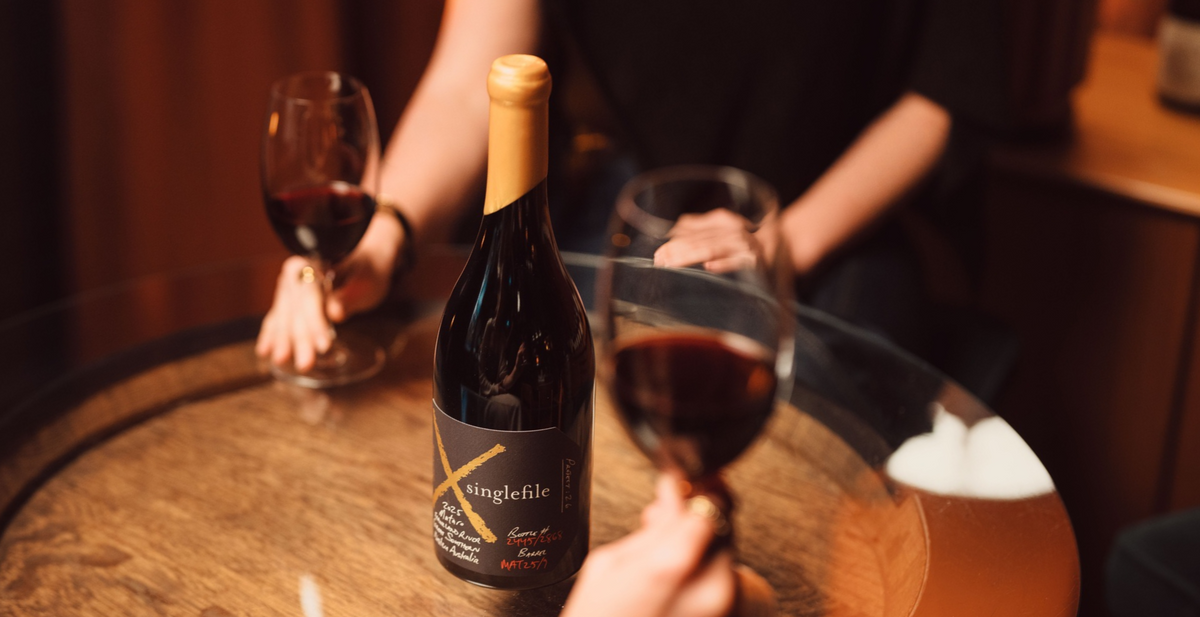
At Singlefile, our understanding of pinot noir has evolved over many years in the cool-climate vineyards of Western Australia's Great Southern wine region, culminating in the release of our Family Reserve Pinot Noir from our estate vineyard in Denmark.

Understanding pinot noir clones
One of the fascinating qualities of pinot noir is the number of different expressions that can come from the same grape variety.
Pinot noir is particularly prone to natural genetic mutations. Over centuries of cultivation, these small changes have given rise to hundreds of different clones, each with its own characteristics. Think of them as different versions of the same grape variety, with subtle variations in how they grow, ripen and ultimately taste.
Some clones produce wines with generous fruit flavours and richer structure, while others are prized for their delicate floral aromas and finer texture. These differences make clonal selection an important consideration for winegrowers.
The character of any clone is also shaped by where it grows. Climate, soil, vine age and vineyard management all influence the final wine, meaning that the same clone can produce quite different results from one site to another. For winemakers, growing more than one clone offers an opportunity to bring together complementary qualities, creating wines with greater depth and complexity.
The pinot noir clones at Singlefile
When we established the pinot noir plantings at our Denmark estate vineyard in 2013, we selected two clones in approximately equal proportions: D5V12 and Dijon clone 777.
D5V12 is a foundational pinot noir clone in Australian viticulture, and remains one of the most commonly planted clones in Australia. It is associated with plum and cherry fruit, a savoury edge and a more restrained aromatic profile. It can contribute texture and structure to a wine, providing a foundation for other elements to develop around.
777, a Dijon clone originating from Burgundy, is particularly valued for its rich fruit character and expressive aromatics. Often producing concentrated cherry and berry flavours, it can bring perfume, generosity and depth to the finished wine.
Together, these two clones offer complementary qualities: the savoury detail and structure of D5V12 alongside the aromatic richness and concentration of 777. They form an important part of the character and layered complexity of our estate-grown pinot noir.

The challenges of growing cool-climate pinot noir
The sensitivity of pinot noir extends well beyond its choice of clone. Early budding can leave the variety vulnerable to spring frosts, while its thin-skinned berries and tightly clustered bunches can increase the risk of disease in unfavourable conditions. As harvest approaches, birds can also present a significant challenge. At Singlefile, protecting the ripening fruit has required considerable attention over the years, not least from our resident geese, who have shown a particular appreciation for the grapes.
The ideal growing season allows the fruit to ripen gradually, developing flavour and tannin maturity while retaining natural acidity. This balance is especially important for pinot noir, where the relationship between freshness, fruit concentration and structure contributes so much to the finished wine. The Great Southern provides an environment well suited to this gradual development, although its varied landscapes mean that vineyard selection remains essential.
Our estate vineyard in Denmark's Scotsdale Valley benefits from a particularly cool microclimate and a long growing season. The vines ripen slowly, allowing flavour to develop while retaining the natural acidity that gives the finished wine its freshness and length.
This relationship between climate and site is central to the character of Great Southern pinot noir, and one we explore further in our companion article, Pinot Noir in the Great Southern.
Pinot noir winemaking: Preserving fruit, building complexity
The delicacy of pinot noir calls for a considered approach in the winery. The aim is not necessarily to intervene as little as possible, but to understand which techniques will best preserve and complement the qualities of the fruit.
Cold soaking and fermentation
Cold soaking is a technique in which crushed or destemmed grapes are held at a low temperature before alcoholic fermentation begins. This period of contact between the juice and skins can encourage the extraction of colour and certain aromatic compounds, helping to develop fragrance and fruit expression without relying on more vigorous extraction.
Fermentation methods also influence the finished wine. Small open fermenters allow careful management of extraction, while fermentation in oak barrels can contribute to texture and the integration of fruit, tannin and oak.
Whole bunch fermentation and stem inclusion
Another important consideration is whether the grapes are destemmed before fermentation or whether some whole bunches are retained. Whole bunch fermentation introduces stems into the fermenting must, potentially contributing savoury, herbal and spicy notes, as well as influencing tannin structure and texture.
The technique requires care. Stems that are insufficiently mature can introduce excessive green characters, while an appropriate proportion of whole bunches can bring aromatic lift and structural detail. These subtle contributions can be particularly appealing, complementing the variety's natural fruit character with additional savoury complexity.
The influence of French oak
Oak maturation is another important element in shaping pinot noir's development. French oak barrels can contribute fine tannin, texture and subtle spice, while the gradual exposure to oxygen during maturation helps integrate the wine's structural elements.
The proportion of new and used, or seasoned, oak is particularly important. New barrels can lend more pronounced oak-derived flavours, while older barrels allow the fruit to develop with less overt oak influence. With a more delicate grape like pinot noir, the choice of oak is made with consideration to supporting the wine's natural character, without overpowering or competing with it.

Singlefile Family Reserve Pinot Noir: A long-held ambition
The story of our Family Reserve Pinot Noir began well before its inaugural release in 2023.
When our family assumed custodianship of the Singlefile estate vineyard in 2007, the property was planted to chardonnay, merlot and shiraz. The chardonnay vines, established in 1986, had already demonstrated the remarkable suitability of the site for premium cool-climate wine.
Over subsequent vintages, our understanding of the vineyard deepened. While the chardonnay continued to thrive, it became increasingly apparent that the cool microclimate of Denmark's Scotsdale Valley might offer a more compelling home for pinot noir than for the existing merlot and shiraz vines.
In 2013, we began replacing those varieties with pinot noir, planting approximately equal proportions of clones 777 and D5V12. The first harvest in 2018 was small, but promising. The fruit became part of our Small Batch collection, followed by another expression in 2021. These early wines offered an indication of what might be possible as the vineyard matured.
A decade after planting, the 2023 vintage provided the fruit quality and depth needed to realise our ambition. The resulting wine became the inaugural Family Reserve Pinot Noir, joining our Family Reserve Chardonnay as an expression of the character and potential of our Denmark estate vineyard.
What distinguishes Family Reserve from our Single Vineyard pinot noirs?
Our approach to pinot noir begins with an appreciation for the differences between vineyard sites. The Single Vineyard Mount Barker Pinot Noir and Single Vineyard Porongurup Pinot Noir are made to reflect the individual character of their respective vineyards. Each offers a distinct expression of the Great Southern, revealing the influence of its particular climate, soils and growing conditions.
The Family Reserve Pinot Noir follows a somewhat different philosophy. Rooted in our Denmark estate vineyard, it is crafted in a later-picked style, allowing greater development of varietal flavour and structural depth while retaining the natural acidity of the cool-climate site.
The intention is to create a more layered and concentrated expression of pinot noir, with the depth, balance and capacity for development that have come to define our Family Reserve collection.
The newly released 2025 vintage marks another chapter in the development of this wine. With its delicate structure, layered fruit and savoury complexity, the 2025 Singlefile Family Reserve Pinot Noir is an expression of the patient work undertaken in the vineyard, and the understanding gained over successive vintages.
How long can you cellar pinot noir?
Pinot noir is often appreciated for its fragrance, supple texture and vibrant fruit in youth. Yet carefully made examples can develop remarkable complexity with time in bottle.
The ideal cellaring period depends on the wine's concentration, acidity, tannin structure and vintage conditions, as well as the environment in which it is stored.
Lighter, fruit-driven pinot noirs are often enjoyed within their first few years, when their fresh cherry and berry characters are most prominent. More structured expressions may reward five to ten years in the cellar, while selected premium expressions can continue to develop for longer.
How does pinot noir change with age?
As pinot noir matures, its primary fruit character gradually evolves. Fresh cherry and raspberry aromas may give way to dried fruit, forest floor, mushroom, spice and earthy undertones. Tannins can become more integrated, while the palate develops additional harmony and savoury depth.
These changes are rarely linear. A wine may appear particularly expressive at one stage of its development, become more restrained for a period, then reveal new complexity with further time in bottle.
This capacity for evolution is part of the pleasure of cellaring pinot noir. Opening bottles from the same vintage over several years allows the drinker to follow the wine's development and discover different aspects of its character.
Our 2025 Family Reserve Pinot Noir has a recommended cellaring potential of up to 15 years, reflecting its balance of fruit concentration, natural acidity and fine tannin structure. As with any wine intended for ageing, consistent storage conditions are essential. A cool, dark environment with minimal temperature fluctuation will give the wine the best opportunity to develop as intended.

What food pairs well with pinot noir?
The natural acidity, fine tannins and savoury complexity of pinot noir make it particularly versatile with food. Duck is a classic pairing, especially when roasted or served with earthy accompaniments. Pork, roast chicken and lighter game dishes also work beautifully, with the wine's freshness bringing balance to richer flavours.
Mushroom-based dishes are another natural match, particularly as pinot noir develops more savoury characteristics with age. Wild mushrooms, thyme and roasted root vegetables can complement its earthy undertones without overwhelming the fruit.
For the 2025 Family Reserve Pinot Noir, we particularly enjoy the idea of roast duck or pork with seasonal root vegetables, allowing the wine's delicate structure and layered flavours to find a natural place at the table.
A wine shaped by patience and place
Perhaps the greatest fascination of pinot noir lies in the way it weaves together so many influences. The choice of clone, the climate of the vineyard, the decisions made at harvest and the approach taken in the winery all contribute to its final character. Even after bottling, the wine continues to evolve, revealing new qualities with time.
For Singlefile, the Family Reserve Pinot Noir represents a long-held ambition for our Denmark estate vineyard, and the patience required to understand what a particular site can offer. As we release the 2025 vintage, we are reminded that some of the most rewarding outcomes in winemaking are those that take years to realise.