Why Riesling is one of Australia's Finest Cellaring Wines
There are few wines that reward patience quite like a well-made riesling.
In its youth, a Great Southern riesling is all precision and restraint: fragrant citrus blossom, fresh lemon and lime, crisp green apple and a line of vibrant acidity that carries the wine effortlessly across the palate. Yet beneath that freshness lies remarkable longevity. Given time in bottle, these bright, youthful wines slowly transform into something altogether different, developing layers of honey, toast and spice while retaining the freshness that made them so captivating in the first place.
It is this extraordinary ability to evolve that has made riesling one of the country's most celebrated cellaring wines. From the renowned vineyards of the Clare and Eden Valleys to the cool-climate sites of Western Australia's Great Southern, riesling demonstrates that age can be every bit as important a consideration as site or season.

A Variety with Ancient Origins
Riesling traces its origins to Germany's Rhine Valley, where it has been cultivated for more than six centuries. It is one of the world's noble white grape varieties, prized for its ability to faithfully express the vineyard in which it is grown.
Unlike many aromatic white varieties, riesling is rarely shaped by oak or elaborate winemaking techniques. Instead, careful vineyard management, gentle handling and cool fermentation allow the fruit and site to speak with remarkable clarity. Riesling is a grape which offers a pure expression of terroir, capable of revealing subtle differences in climate, soil and elevation.
Australia adopted the variety early, with the first plantings established on the East Coast in the 1830s. Today, Australian riesling enjoys an international reputation for its purity, elegance and exceptional ageing potential.
Dry or Sweet? Understanding Modern Riesling
For many wine drinkers, riesling still carries an outdated reputation as a sweet wine.
Much of this perception stems from the popularity of sweeter German imports during the 1970s and 1980s. While Germany continues to produce exceptional wines across a spectrum of styles, that historical association has lingered long after Australian winemaking moved in a different direction.
Today, the overwhelming majority of premium Australian rieslings are produced in a dry style. These wines are defined not by sweetness but by freshness, purity and vibrant natural acidity. The key distinction lies in balance. Generous fruit flavours are countered with bright citrus, delicate aromatics and mineral tension, creating wines that feel energetic and refreshing rather than rich or cloying.
For those who have avoided riesling believing it to be sweet, modern Great Southern riesling often offers an entirely different experience.

Why the Great Southern is Ideal for Riesling
Few grape varieties respond to climate as sensitively as riesling. The Great Southern's cool growing season, maritime influence and long, gradual ripening period allow grapes to develop intense flavour while preserving the naturally high acidity that gives the variety its precision and longevity.
Within the region, the Porongurup and Mount Barker subregions have become particularly renowned for producing exceptional examples, with Porongurup riesling prized for its pristine delicacy, while Mount Barker riesling tends towards firmer structure and driving citrus acidity. Growing conditions encourage slow flavour development while maintaining freshness, resulting in wines of remarkable purity and structure.
Since the first experimental plantings at Forest Hill in the 1960s, the region has steadily built an international reputation for producing world-class riesling. Today, many wine lovers regard Great Southern rieslings alongside the celebrated wines of Clare Valley and Eden Valley.
What Does Dry Cool-Climate Riesling Taste Like?
Young dry riesling is often one of the most aromatic white wines in the glass.
Classic riesling tasting notes typically include lifted aromas of lime zest, lemon blossom, green apple, white flowers and subtle hints of talc or wet stone. On the palate, vibrant citrus fruit is supported by refreshing acidity and a long, mineral finish.
The hallmark of good Australian riesling is balance. The acidity should feel bright rather than aggressive, providing energy and length without overwhelming the fruit. This natural structure is one of the reasons the variety has become so highly regarded by collectors and sommeliers alike.
And while many white wines are intended to be enjoyed soon after release, riesling possesses an uncommon ability to evolve gracefully over decades.
Why Riesling is One of the Great Cellaring Wines
The same natural acidity that makes young riesling feel so vibrant also acts as one of its greatest strengths in the cellar. Acidity serves as a natural preservative, allowing the wine to age slowly while developing increasingly complex aromas and flavours. Over time, the palate becomes broader and more textural, yet the wine retains a remarkable sense of freshness. Youthful citrus characters soften into notes of preserved lemon, beeswax, toast, honey, chamomile and warm spice. Some rieslings, especially from warmer, sunny regions, develop kerosene-like notes with age, a highly prized hallmark of mature riesling among collectors.
Perhaps the most fascinating aspect of cellared riesling is that these changes occur gradually rather than replacing the wine's original character. Mature examples continue to carry the mineral line and brightness of their youth, layered with additional complexity.
It is this play between freshness and aged character that makes a mature riesling unlike almost any other white wine.

How Long Can You Cellar Riesling?
The answer depends on the wine and the vintage, but premium dry rieslings from cool-climate regions are often capable of ageing for ten years or more, with exceptional examples continuing to evolve for decades.
Many wine lovers enjoy following this journey by opening a bottle every few years, discovering how the wine gradually changes over time. The bright citrus fruit of its youth slowly gives way to richer, savoury characters, creating an entirely different drinking experience while remaining unmistakably riesling. For collectors, few varieties offer such a rewarding evolution.
For best results, riesling should be cellared in a cool, dark and stable environment, away from heat, light and vibration. Consistent temperature is more important than absolute cold; a wine fridge or well-managed cellar will allow the wine to evolve slowly while preserving freshness.
Riesling Food Pairing: Young and Mature Styles
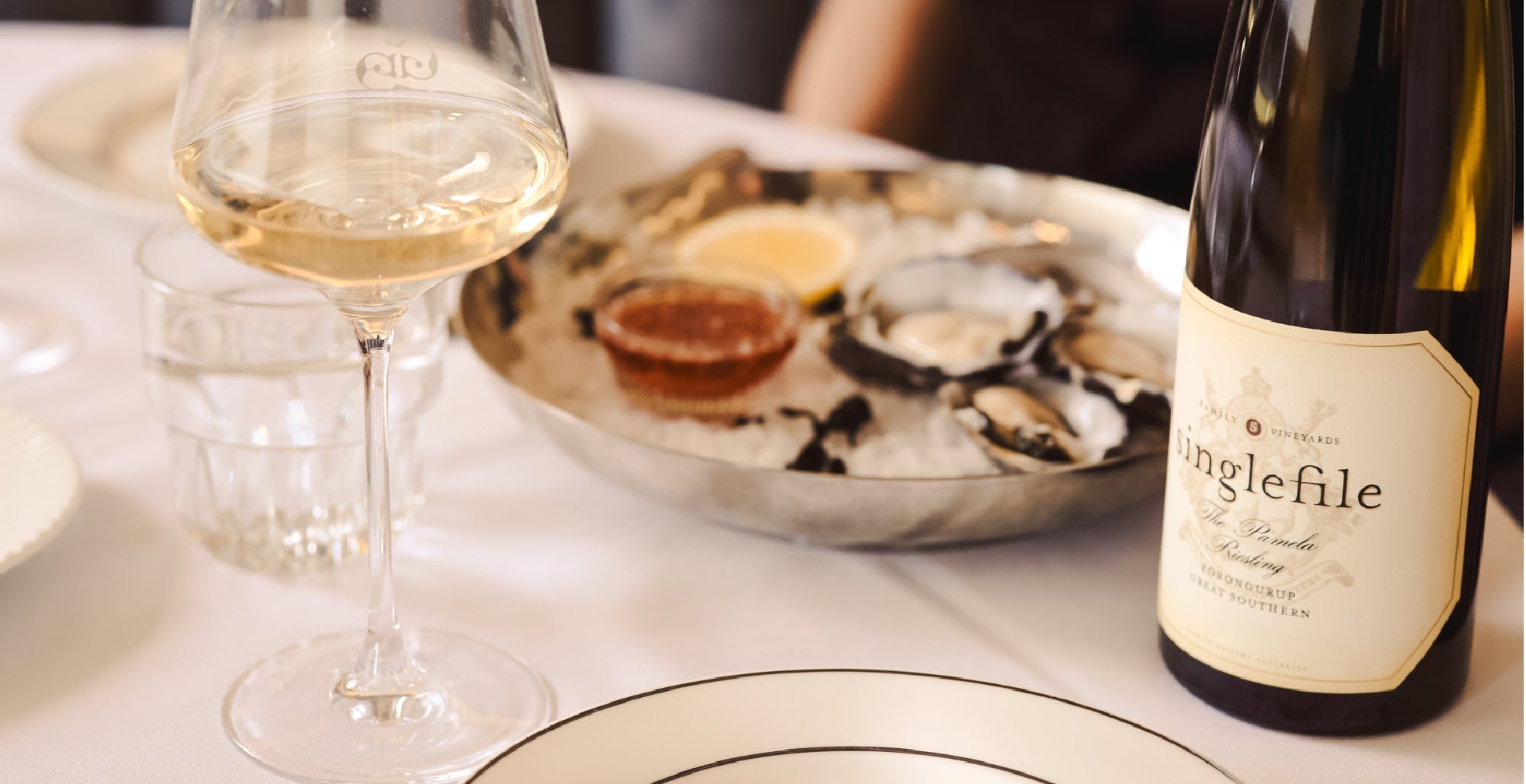
One of riesling's greatest strengths is its versatility at the table. A young dry riesling with seafood is a classic pairing for good reason: the wine's bright acidity makes it an ideal companion for freshly shucked oysters, grilled prawns, sashimi, delicate white fish and salads dressed with citrus. Its freshness also complements dishes featuring gentle spice, including Thai and Vietnamese cuisine, where aromatic herbs and chilli are balanced by the wine's vibrant fruit.
As riesling matures, its richer texture and honeyed complexity open new pairing possibilities. Roast chicken, pork with apple, mushroom dishes, washed-rind cheeses and creamy pasta all find harmony with the deeper, more savoury characteristics of an aged bottle.
Perhaps more than many white wines, riesling food pairing evolves alongside the wine itself, offering new possibilities with every stage of maturity.

A Wine Worth Waiting For
Many great wines can be measured not only by how they taste today, but by how they reward patience.
The finest Great Southern riesling captures the purity of a cool-climate growing season while offering the rare promise of transformation in bottle. Whether opened young or drawn from the cellar a decade on, the best Australian riesling rewards curiosity, and remains one of Australia's most compelling white wines.