What is Gamay? Tasting Notes, Food Pairings and Australian Expressions
Fragrant, fresh and quietly expressive, Gamay occupies a distinctive place among red grape varieties. It can produce light, bright wines made for early enjoyment, but it is equally capable of depth, savoury detail and graceful development in bottle.
In this short video, Claire from the Singlefile Perth team introduces the character of gamay and explains how carbonic maceration shapes our Great Southern expression. She also shares what to expect in the glass, along with a simple serving suggestion to bring its fruit and aromatics to the fore.
What is gamay?
Gamay is a red grape variety best known as the principal grape of Beaujolais, a wine region immediately south of Burgundy in France. Its full name is Gamay Noir à Jus Blanc, a reference to its dark skins and pale juice.
The variety is naturally suited to making aromatic, lighter-bodied red wines. Typical examples combine vivid fruit with fresh acidity, moderate alcohol and relatively gentle tannins. These wines are generally approachable and enjoyed when young and vibrant, although examples from distinguished sites can also develop considerable structure and complexity.
Gamay is a cousin of pinot noir, and admirers of pinot are often drawn to its perfume, freshness and savoury edge. The two varieties are not interchangeable, however. Gamay commonly shows a more openly fruity profile, with a supple palate and its own distinctive floral, herbal and savoury notes.
The history and origins of gamay
Gamay has a long history in France. It was once planted more widely throughout Burgundy, where it grew readily and produced generous crops. Over time, pinot noir became the dominant red variety of Burgundy’s most prestigious vineyards, while gamay established its enduring home further south in Beaujolais.
Here, the variety found conditions in which it could express both its natural brightness and also its more complex characteristics. The granitic and sandy soils found across much of northern Beaujolais proved particularly well suited to gamay, helping the region establish a clear identity of its own.
This history is part of the reason the name Beaujolais is often better known than the grape itself. Most red Beaujolais is gamay, but not every gamay wine comes from Beaujolais. Today, the variety is also grown elsewhere in France and in small quantities across countries including Australia, New Zealand, Canada and the United States.
Gamay and the wines of Beaujolais
Beaujolais produces several expressions of gamay, ranging from simple, youthful wines to structured examples shaped by individual villages and vineyard sites.
Beaujolais Nouveau is the region’s most widely known style. Released shortly after harvest, it is made to emphasise freshness and fruit character, and is crafted for early enjoyment. Its popularity helped introduce many drinkers to gamay, although it is sometimes viewed as a playful and less sophisticated wine.
Greater quality and complexity are generally associated with the village and cru level wines. Beaujolais-Villages generally comes from selected communes, often in hillier areas, and can offer greater concentration and definition.
At the top of the regional hierarchy are the Beaujolais crus. These wines are named for one of the ten recognised appellations in the northern part of the region: Saint-Amour, Juliénas, Chénas, Moulin-à-Vent, Fleurie, Chiroubles, Morgon, Régnié, Côte de Brouilly and Brouilly. Each is associated with a particular area and broadly recognisable wine character. These wines can range from delicate and floral to deeply savoury, structured and suitable for cellaring.

How carbonic maceration shapes gamay
Carbonic maceration is a fermentation method strongly associated with Beaujolais gamay. Rather than crushing the grapes before fermentation, winemakers place intact bunches or berries into a vessel and create an environment rich in carbon dioxide.
Fermentation begins inside the unbroken berries. As the process continues, some fruit at the bottom of the vessel is naturally crushed by the weight above it, releasing juice and beginning a more conventional fermentation.
This method can produce wine with vivid fruit, lifted perfume, bright colour and soft tannins. Common aromatic associations include cherry, raspberry, violet and, in especially youthful styles, notes reminiscent of confectionery.
Carbonic maceration does not automatically make a wine simple or sweet. The length of maceration, proportion of whole bunches, fermentation temperature, pressing decisions and maturation vessel all influence the finished wine. More structured gamay may combine whole berries or bunches with longer extraction, traditional fermentation and maturation in concrete, large-format oak or barrel.
The emergence of gamay wine in Australia
Gamay remains a relatively uncommon variety in Australia. Early modern plantings appeared during the 1970s and 1980s, with pioneering examples produced in regions including the Hunter Valley and several cooler parts of Victoria.
Australian gamay is now made in small quantities across regions such as Beechworth, Gippsland, the Mornington Peninsula, the Yarra Valley, the Adelaide Hills, Tasmania and Western Australia’s Great Southern.
There is no single Australian gamay style. Some producers favour bright, juicy wines intended for early drinking, sometimes using carbonic or semi-carbonic maceration. Others pursue greater savoury complexity, tannin and cellaring potential through longer extraction or more conventional fermentation methods.
What many examples share is a sense of freshness. Cool-climate regions with moderate growing conditions and cool nights can help preserve the variety’s aromatics and acidity while allowing its fruit flavours to ripen fully.
Gamay tasting notes: what does gamay taste like?
Gamay tasting notes vary considerably according to region, ripeness, vineyard site and winemaking. In general, the variety is known for fragrant fruit, fresh acidity and fine rather than forceful tannins.
Common gamay aromas and flavours
- Red cherry, sour cherry and dark cherry
- Raspberry, strawberry and redcurrant
- Plum and darker berries in riper or more structured wines
- Violet, peony and other floral notes
- Fresh herbs, bramble and subtle stem-derived spice
- Earth, forest floor and savoury umami characters
- Black pepper, anise or gentle baking spice
Wines made using carbonic maceration can also show highly lifted fruit, confectionery, bubblegum or banana-like aromas. These characters are not present in every gamay and are generally less obvious in more restrained or traditionally structured examples.
Body, tannin and acidity
Most gamay sits in the light to medium-bodied range. Tannins are commonly soft and fine, while naturally lively acidity gives the wine freshness and makes it particularly versatile at the table.
Young, fruit-led examples may be enjoyed soon after release. More concentrated gamay, especially cru Beaujolais or wines from carefully selected cool-climate sites, can develop earthy, spicy and savoury detail over several years.
Gamay food pairing
Gamay is a compelling and versatile food pairing wine, offering a balance of fresh acidity, modest tannin and aromatic fruit. It can accompany dishes that overwhelm delicate white wines, while remaining gentle enough for foods that might be dominated by heavier reds.

Roast chicken and duck
Roast chicken is a natural partner, particularly when served with herbs, mushrooms or a light jus or sticky glaze. Gamay also works well with duck, where its acidity refreshes the palate and its cherry-like fruit complements the richness of the meat.
Pork and charcuterie
The variety’s freshness makes it well suited to roast pork, pork belly, terrines and charcuterie. Acidity provides contrast to fat and salt, while soft tannins avoid making the combination feel overly 'firm'.
Mushrooms and earthy vegetables
Mushrooms complement the savoury characters found in many expressions of gamay. Consider mushroom tart, risotto, lentil dishes, roasted beetroot or grilled vegetables.
Spiced dishes and curries
Lightly spiced chicken, aromatic curries and dishes using warm spices can work especially well. A fruit-forward gamay can soften the impression of spice, although very hot chilli may make alcohol and tannin feel more pronounced.
Fish and lighter proteins
Gamay can also accompany richer fish such as salmon or tuna, particularly when the wine is lightly chilled. Its low tannin is an advantage, as strongly tannic reds can create an unpleasant metallic impression beside some fish dishes.
Gamay in the Great Southern
The Great Southern wine region offers a long, cool growing season across a diverse landscape in southern Western Australia. These conditions provide an opportunity to retain gamay’s natural aromatics and acidity while developing ripe, expressive fruit.
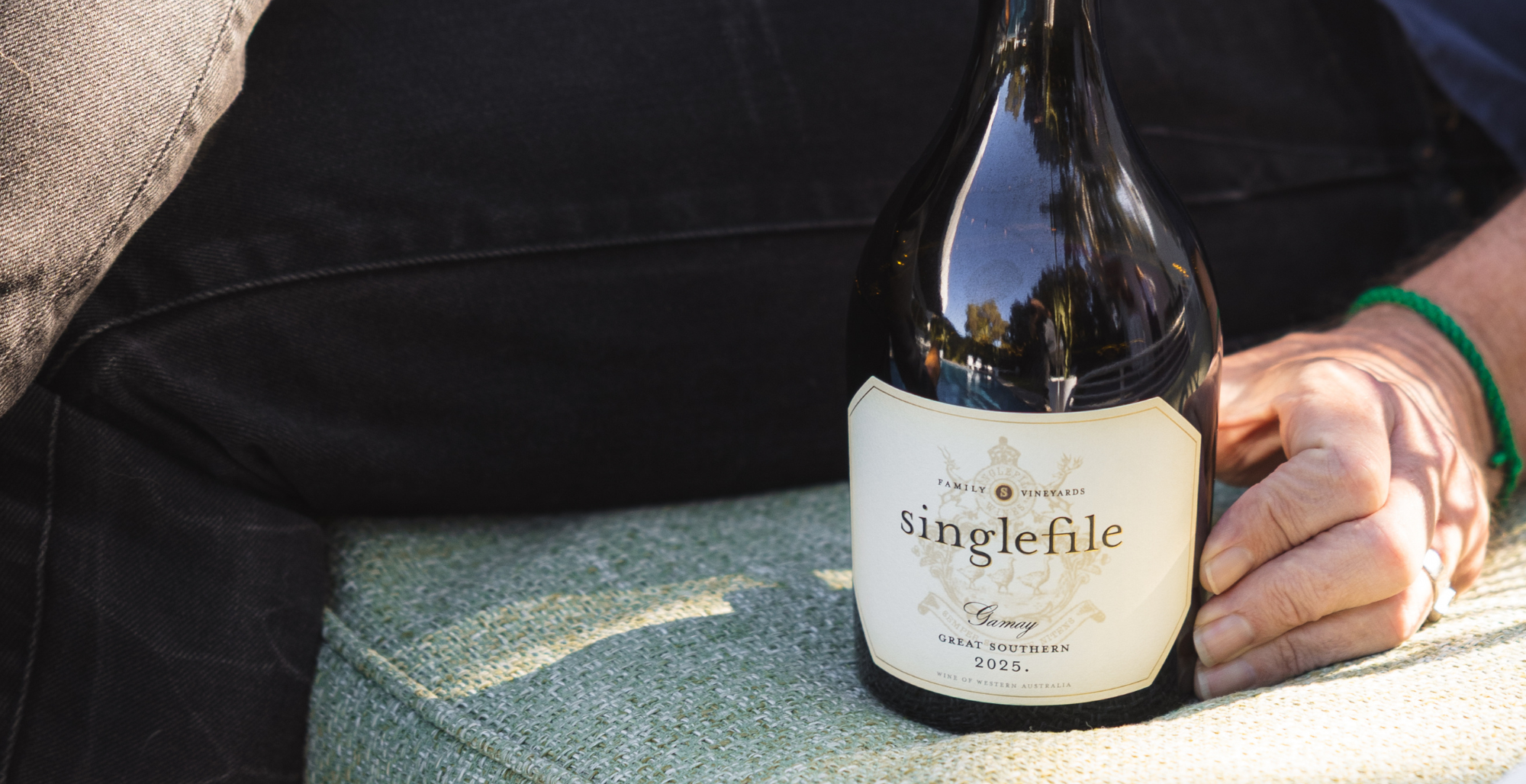
Our 2025 Singlefile Great Southern Gamay was handpicked and underwent full carbonic maceration for 14 days before completing fermentation in barrel. It is a lighter-bodied expression showing dark cherry, forest flowers and spice, with brambly, herbal and earthy detail, soft tannins and a dry finish.
It can be enjoyed lightly chilled and paired with dishes including roast chicken, mushrooms, duck, hard cheese, charcuterie, pizza, curries and barbecue.