Article: A Glass With... Barry Weinman
A Glass With... Barry Weinman
For almost three decades, Perth-based wine writer Barry Weinman has approached wine with the curiosity of a collector and the discipline of a critic. Through Weinman on Wine, his website and newsletter, Barry has built a body of work grounded in independence, considered tasting and a simple guiding question: is this a wine worth drinking?
Established in 2009, Weinman on Wine reflects Barry’s belief that wine should be assessed not only on technical quality, but on the pleasure it offers, its capacity to develop with age, its individuality and the value it represents. Whenever possible, wines are tasted blind and comparatively, often alongside a longstanding panel of experienced palates. Consensus, context and transparency are central to the process, with Barry placing particular importance on maintaining an independent perspective.
While his writing spans regions and producers from Australia and around the world, Western Australian wine has remained a strong and recurring focus, in large part because of the value it represents against its global peers. His reviews are shaped as much by the perspective of a wine lover and cellar-builder as by that of a critic. In conversation with Singlefile, Barry reflects on the experiences and influences that have shaped his approach to wine over the past thirty years.
An informal apprenticeship in wine
Barry describes his wine education as an apprenticeship, beginning in 1994 when respected Western Australian wine figure John Jens invited him to join his tasting panel.
“At the time, John was really driven to nurture young people who showed an interest in wine, and he took me under his wing at a very early age,” Barry recalls. From there came years of tasting, discussion and exposure to wines from Australia and around the world. By the mid-2000s, Barry had taken over the role of hosting and chairing the panel, continuing a process of learning that remains deliberately practical rather than formal.
Central to that education has been the training of the senses. Barry speaks about tasting as a discipline in itself: developing an acute awareness of aroma and flavour, but also protecting and continually exercising that sensitivity. For him, knowledge alone is not enough. A good taster also needs an ability to differentiate, the passion to remain curious and the discipline to keep the senses finely tuned.

Blind tasting and the importance of perspective
One of the most enduring lessons Barry took from Jens was the importance of perspective.
“To taste a bottle of wine in isolation and say that it is a great wine does not tell the full story,” Barry says. Place that same wine in a blind tasting among a group of its peers and the value lies in the comparison. “Scoring a wine gives a review context in terms of its quality, but the raw number itself is less interesting to me than if it scored 96 points and the wine beside it scored 94.” That perspective completes the picture.
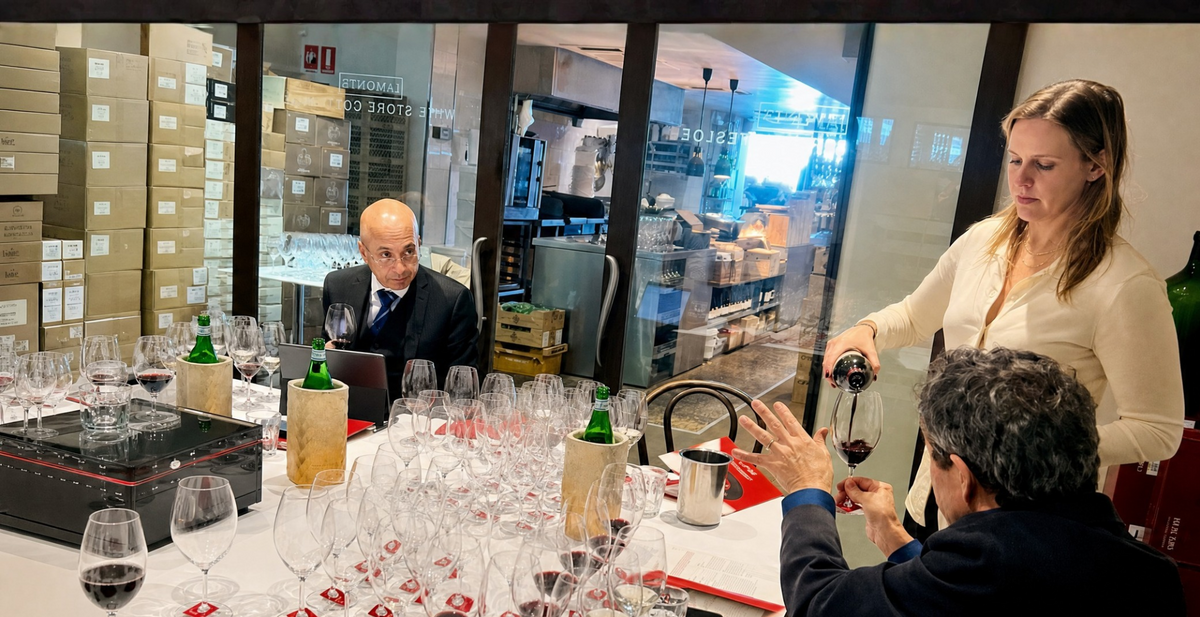
It is a principle that continues to shape the way Weinman on Wine operates today. A tasting might involve twenty chardonnays side-by-side, tasted blind and assessed individually before the panel discusses them.
For Barry, the tasting panel acts as a form of quality control. When his assessment sits apart from everybody else’s, it is a signal to return to the glass before the identity of the wine is revealed. “You sometimes come across a wine that's not bad, but it’s perhaps a bit shy or restrained, or a bit more powerful, or simply in a different style to what you're used to,” he explains. “And so the key thing for me with the panel is to make sure I don’t miss that wine.”
The resulting published review is still his own, but the discussion around the table inevitably adds depth and colour, or a reminder to consider a wine from a slightly different angle.
Scoring, quality and enjoyment
When reviewing, scores provide a benchmark that gives the descriptive language a clearer context. Without them, an eloquent tasting note can sometimes leave the reader unsure whether the wine in question is simply enjoyable or genuinely exceptional.
Yet quality alone is not quite enough to earn a wholehearted recommendation. Barry admits that he occasionally encounters wines that are technically impressive - and worthy of a high score - but which he would have little desire to drink himself.
“Every wine I recommend is a wine that, at some point in its evolution, I would want to drink.”
That distinction reveals much about his wider philosophy. Elegance and balance matter, but so too does pleasure. A wine may offer immediate enjoyment or require years in the cellar before revealing its best, but there must ultimately be a point at which Barry can imagine wanting to sit down and savour it.
This longer view is partly that of a collector. Barry is interested not simply in how a wine presents on release, but in what it might become in ten, twenty or even thirty years. His goal is to find excellent wines across multiple price points: bottles that are capable of delivering pleasure today, alongside those that promise something more with patience.

From private tasting notes to Weinman on Wine
Weinman on Wine began as a happy accident. Barry had originally registered the ‘finewineclub’ domain while considering a move into wine retail. When that plan failed to eventuate, he was left with a website, and a fifteen-year history of tasting notes he had never before shared. Encouraged over the years by positive responses to the way he approached his notes, he began publishing them in 2009.
Doing so changed the nature of tasting for him. What had previously been a private passion became, in Barry’s words, a responsibility. “If a winery sends wines to me, I have an obligation to assess them, and to publish reviews, if appropriate,” Barry begins. “Maybe only 10-20% of the wines I taste are given a published review, and that’s a good thing. I want to share great wines with people, and also do justice to the producers who have put so much into making them.”
“It’s easy to be a critic,” he observes. “It’s very hard to be a great winemaker.”
Tasting with a global frame of reference
Barry regularly tastes wines from the traditional wine regions across Europe, as well as the major ‘new world’ regions, alongside Australian examples. That broad exposure gives him a reference point for understanding how varieties and styles express themselves in different places, and helps inform the way he judges quality at home.
For Barry, this wider context is important because different regions, climates and winemaking approaches can produce diverse expressions of the same grape. He sees value in understanding those differences rather than judging every wine against a single ideal.
It also helps him separate lasting quality from passing fashions in winemaking, pointing out the green cabernets being lauded in the early 1990s and the lean, razor-sharp chardonnays that became influential in Victoria through the 2000s as styles that have not survived the passage of time.
“In regards to those chardonnays, at the time, some wine writers were falling over themselves to give high scores to these wines, but now that style has wound back, and people are making more balanced chardonnays with a little ‘meat’ on them. Wine styles change and fashions change. Quality doesn’t change.”
That does not mean Barry is resistant to evolution - rather, he is wary of allowing novelty to become a measure of merit. Regular exposure to benchmark wines from around the world gives him a broad basis for comparison and helps keep his palate open to different styles, while still returning to the fundamentals he values most: “Great riesling, great chardonnay, great cabernet - that’s never gone in or out of fashion with me.”
The value of Western Australian wine
That international context also informs Barry’s view of Western Australian wine, particularly its value. He believes many of the state’s leading wines, particularly chardonnays and cabernets, compare remarkably well with far more expensive international counterparts. Beyond a certain price level however, he suggests the differences become increasingly stylistic rather than qualitative.
“When you’re talking quality between a great $100 chardonnay and a $500 chardonnay, there's not a lot in it. The sheer value of a high quality Western Australian chardonnay is off the charts. You will struggle to get a generic white Burgundy for the same price, and I know which wine I would prefer to drink.”
That value proposition has been one reason Western Australian producers have remained such a strong focus of his writing. Wines from regions such as Margaret River, Swan Valley and the Great Southern can, in his view, offer both serious quality and cellarability without necessarily carrying the prices attached to comparable wines from more internationally recognised regions.

A lasting connection with Singlefile
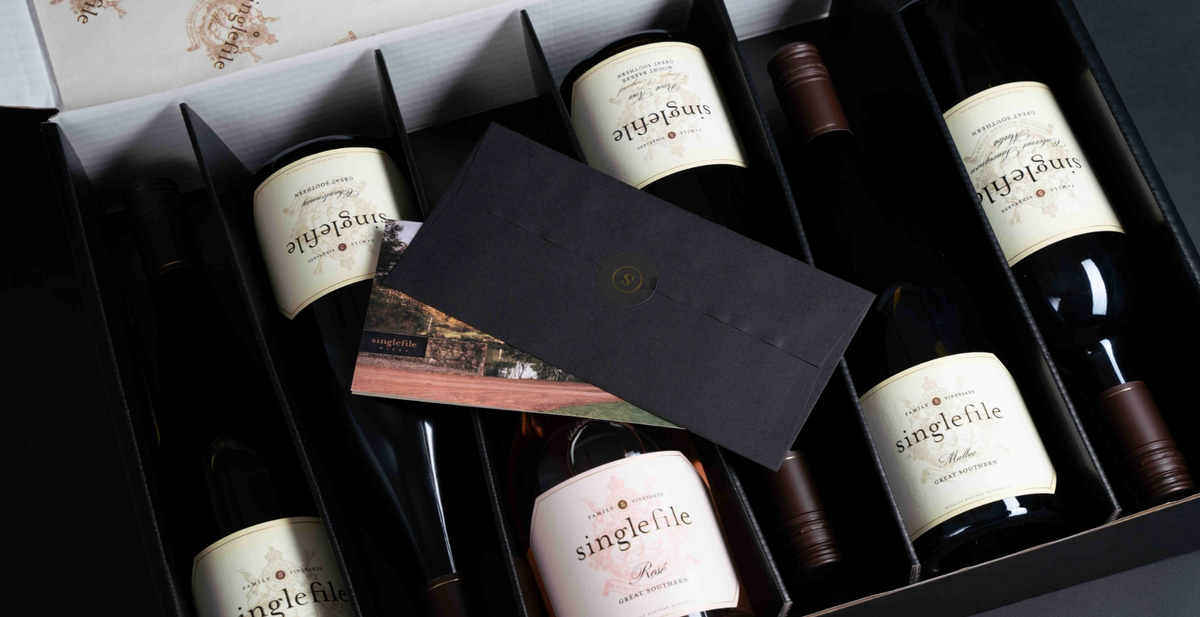
When I asked Barry if he could recall a favourite bottle, or had one particular memory from his visits to Singlefile in Denmark, he instead chose to highlight how the small details throughout a visit combine to create something memorable. For Barry, Singlefile helped set an early benchmark for the seated cellar door experience in Western Australia, and the collective effect of many small choices - from the presentation of the wines to the gardens outside and the attention being paid behind the scenes - is what stays with him.
“There’s no one thing that makes Singlefile special,” he says. “It’s everything that goes into it.”
It is an observation that could equally be applied to the way Barry approaches wine itself. No single score, note or technical detail tells the whole story. What matters is context and, ultimately, whether the wine delivers something worth returning to.