Rhône Reds and Their Influence on the Australian Wine Landscape
The Rhône Valley stands among the most historically significant and stylistically influential wine regions in the world. While its scale and complexity can appear daunting, its enduring appeal lies in a clear and compelling philosophy of blending, place, and tradition. Stretching from Vienne in the north to Avignon in the south, the Rhône Valley follows the course of the Rhône River through south-eastern France.

A Region Defined by Contrast: North vs. South
The Rhône is broadly divided into northern and southern subregions, each with distinct climatic conditions and winemaking traditions. The north is comparatively small and focused, producing predominantly syrah-based wines of structure and intensity. In contrast, the south accounts for the vast majority of production and is defined by a warmer, Mediterranean climate and a more expansive approach to blending.
While these distinctions are important, it is the philosophy of the southern Rhône - its embrace of varietal interplay and its expression of site - that has had the most profound global influence.
Châteauneuf-du-Pape: Heritage and Complexity
Among the southern Rhône’s appellations, Châteauneuf-du-Pape remains one of its most revered. Translating to “the Pope’s New Castle,” the name reflects the region’s historical connection to the papacy, when Pope Clément V relocated the papal court to Avignon in the 14th century.
The wines of Châteauneuf-du-Pape are defined by both complexity and approachability. Master of Wine and acclaimed critic Jancis Robinson describes these Rhône blends as “France’s most user-friendly wines”. The appellation permits a wide array of grape varieties, enabling blends of remarkable nuance. Grenache typically forms the foundation, supported by syrah (shiraz), mourvèdre (mataro, or monastrell) and a number of complementary varieties, each contributing aromatic lift, structure, or texture.
The resulting wines are generous yet layered, combining ripe fruit, savoury detail, warmth, and a distinctive imprint of the region’s sunlit, stone-strewn vineyards. They remain one of the clearest expressions of blending as both art and tradition.

From Template to Reinterpretation: Frankland River
The Southern Rhône provides the template: a philosophy of blending built on harmony, where multiple varieties are brought together to create wines of balance and complexity.
In Australia, this framework has been thoughtfully reinterpreted. Within Frankland River, in Western Australia’s Great Southern, Rhône varieties have found a natural affinity with the region’s conditions. A Mediterranean climate is moderated by inland elevation and cooling influences, allowing for extended ripening and the preservation of natural acidity.
Where the Southern Rhône speaks in terms of warmth and generosity, Frankland River offers a more refined expression. The same interplay of varieties is present, yet shaped by cooler nights and a longer growing season, resulting in wines of precision and clarity. Fruit profiles tend toward brightness rather than opulence, with savoury nuance and fine tannin playing a defining role.
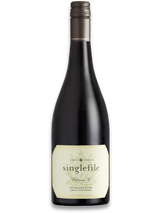
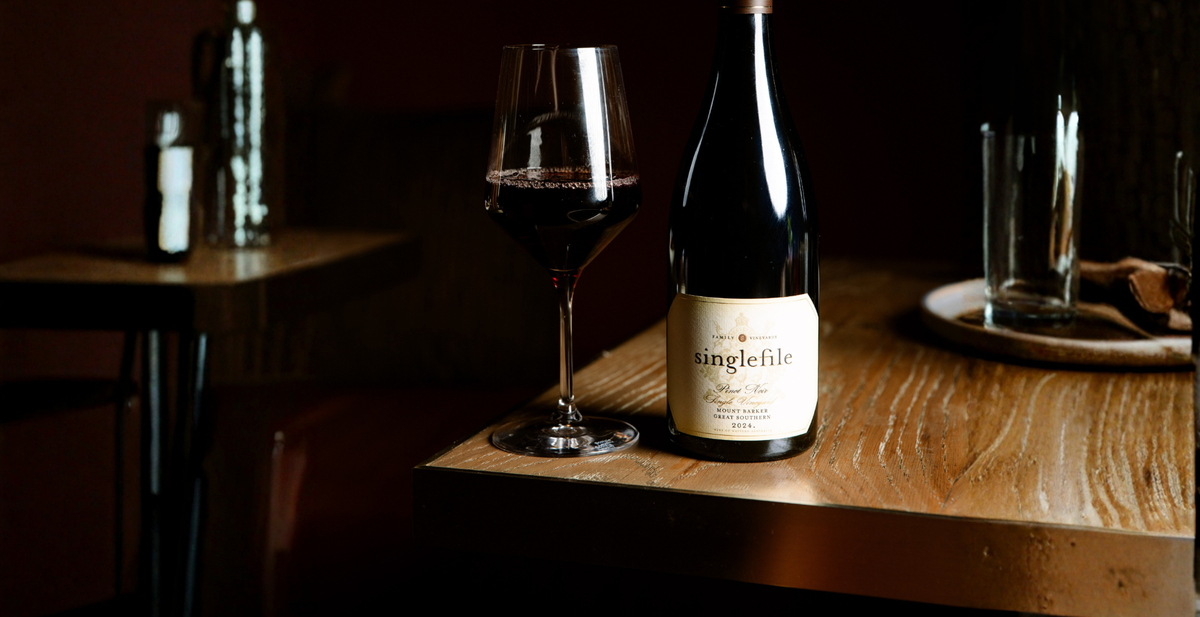
Singlefile’s Clément V is our interpretation of this historic blend. While inspired by the Rhône tradition, it is ultimately an expression of place, capturing the lifted aromatics, textural finesse, and sense of elegance that define Frankland River reds.
The Art of the Blend
At the heart of this shared philosophy lies the enduring partnership of grenache, syrah and mourvèdre - the blend that has come to define the Southern Rhône and, in turn, influence generations of winemakers around the world.
In the Rhône, grenache typically forms the foundation, bringing bright red fruit expression, perfume and subtle spice. Syrah/shiraz contributes depth of colour, darker fruit and savoury complexity, while mourvèdre/mataro provides structure, tannin and persistence. Together, they create wines in which no single component dominates; instead, each plays a vital role in a cohesive whole.
This grenache-dominant approach has become a benchmark for Australian producers in its now very popular ‘GSM’ blend, first crafted in South Australia in the 1980s. In regions such as Frankland River, it has been embraced not as a formula to replicate, but as a framework through which to express site. The result is a distinct interpretation of a classic style with a strong Great Southern identity, honouring its origins while offering a sense of clarity and restraint.

In Singlefile’s Single Vineyard Frankland River Clément V, this philosophy finds a natural expression, bringing together the generosity of the Rhône tradition with the quiet precision of Frankland River. It is a wine shaped as much by inspiration as it is by landscape, and ultimately, one intended to be shared.